Home Physics Programming Art

Howdy! I'm

A Physicist

Research

I am currently a PhD student working with Mahesh Bandi in Okinawa, Japan, studying biological systems using the tools of statistical physics.
Before I came to Okinawa, I was a research technician at North Carolina State University's physics department, which is also where I received my undergraduate degree in physics in 2021. My work there was primarily conducted in Karen Daniels's lab investigating granular physics and soft matter, though I have also worked on high energy hadronic collision simulations with Vladimir Skokov.
Check out some of my past and current projects below!

Probing Granular Materials on Asteroids

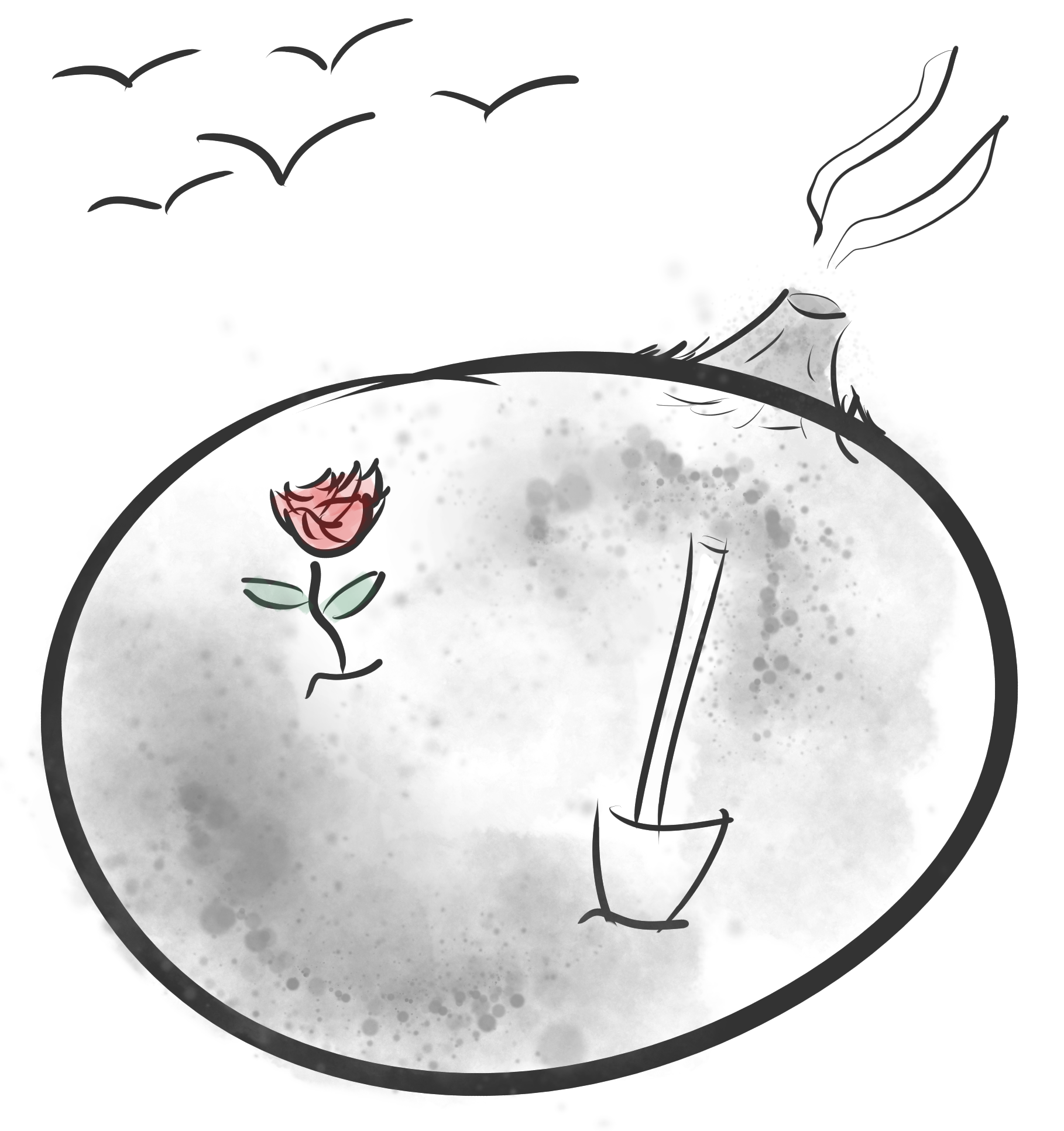
When we think of asteroids in space, we often think of them as big boulders, or composite objects, flying through space (possibly with baobabs growing on them).

In reality, a large number of these astronomical objects are very loosely bound collections of heterogeneous grains, nearly free of the familiar gravitational pull that keeps us grounded on the Earth. Gravity is such a weak interaction (weaker than even the so-called "weak" fundamental interaction) that in the absence of massive planets and stars, the force holding these asteroids together can be 4-5 orders of magnitude (up to 100,000x) less than gravity on the Earth.

Two recent missions have gone to investigate asteroids that fit this description: JAXA's Hayabusa2 mission to Ryugu and NASA's OSIRIS-REx mission to Bennu. And if you're not yet convinced that these objects are barely holding themselves together (like certain grad students), watch what happens as the OSIRIS-REx probe samples the surface of Bennu by expelling a small amount of nitrogen gas and moving at around only 10 cm/s. According to numerical estimations of the probe's contact, it is likely up to 165kg worth of rubble was ejected in the video you just watched!

Our goal with this project is to develop optimized procedures for working in these exotic environments with the paradigm of a flexible probe. That is, how should we go about inserting a flexible intruder into these surfaces without causing a large amount of regolith to be ejected?

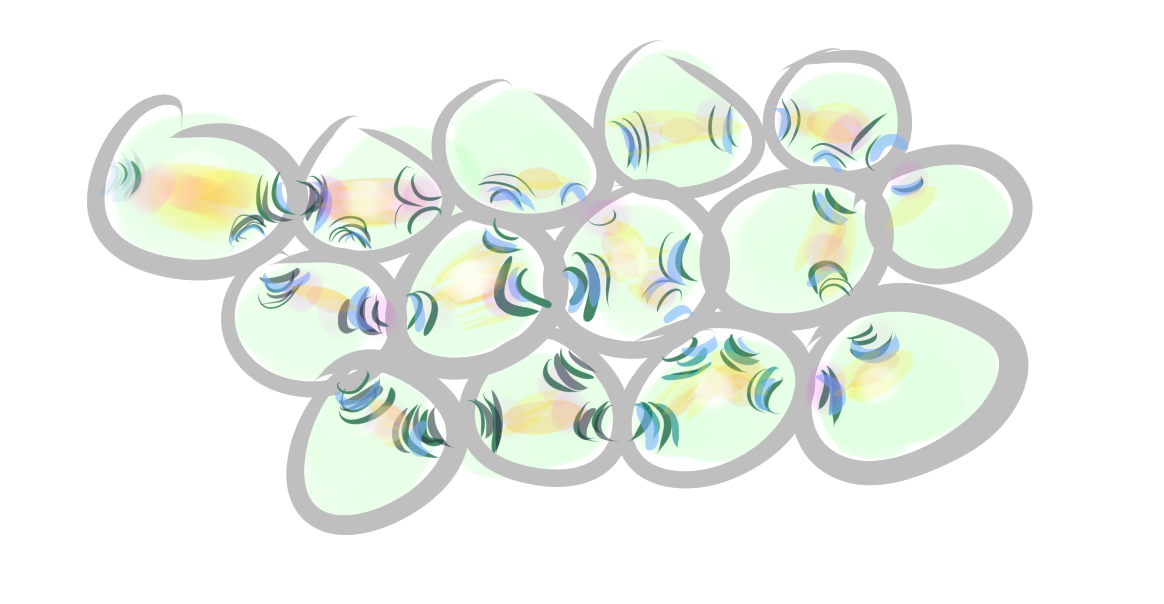
To investigate this, we simulate these systems in a laboratory environment using photoelastic techniques, which clue us into what is happening on the individual grain scale. By quantifying the interactions between grains in low-gravity environments, we look to understand how these microscopic interactions build up to determine the macroscopic dynamics of asteroids.

Want more information (including quantitative results)? Check out our paper!

High Energy Hadron Collisions

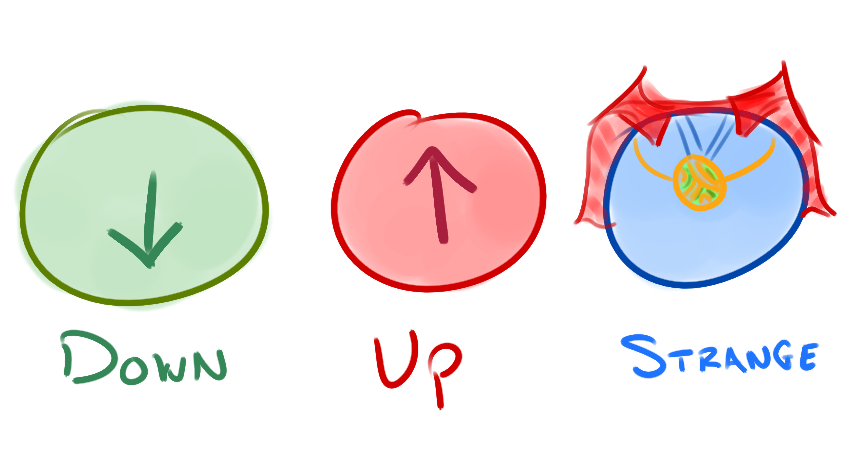
What are protons made of? How did the early universe form? What happens when two particles run into each other really fast? All of these questions reside (at least in part) within the realm of high energy particle physics, which looks to explain the fundamental interactions and compositions of particles from things like quarks.

Of particular importance, the theory of quantum chromodynamics has been fantastically useful in helping us to answer some of the above, and related, questions. Through a framework involving "color" charges, squiggly diagrams, and a whole lot of math, physicists can model and predict what happens inside of the protons and neutrons that were once thought to be fundamental.

Some of the biggest physics collaborations in the world investigate these same problems at particle colliders like the LHC and RHIC. So how can we study the same physics without experiments that require 1 terawatt hour of energy per year? By simulating of course!

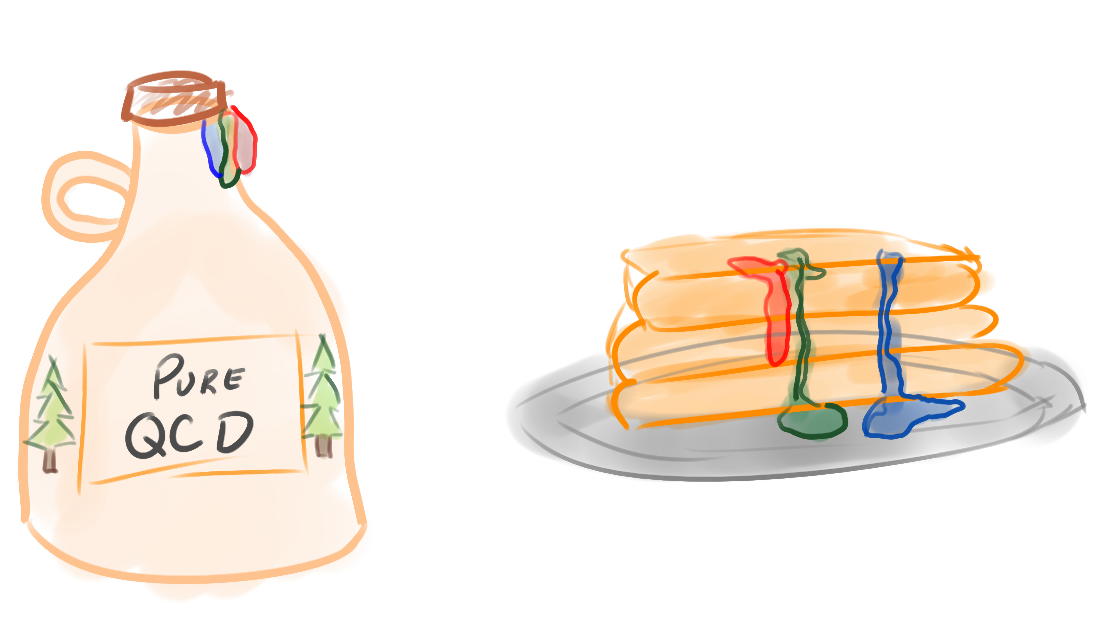
We create simulations that numerically model what happens when protons and neutrons collide at nearly the speed of light. Traveling at such incredible speeds, these particles are greatly affected by relativistic effects like length contraction, resulting in "pancakes" (you could also say a flat soup) of the fundamental gluons and quarks hiding within!

Want some more technical information? Want to run your own simulations in the saturation regime of QCD? Check out the full simulation software here.

Understanding Granular Failure

Failure can take lots of different forms. It is something with which we are all intimately familiar, and plays a fundamental role in the stability of our everyday life.

In the context of granular materials, the concept of "failure" is similarly tied to stability, as it relates to how rearrangements of individual grains cause changes in the strength of the larger material. Given that so much of the world around us is granular, understanding when, why, and how these materials fail is incredibly important for civil engineers, materials scientists, geophysicists, and many others across diverse professions.

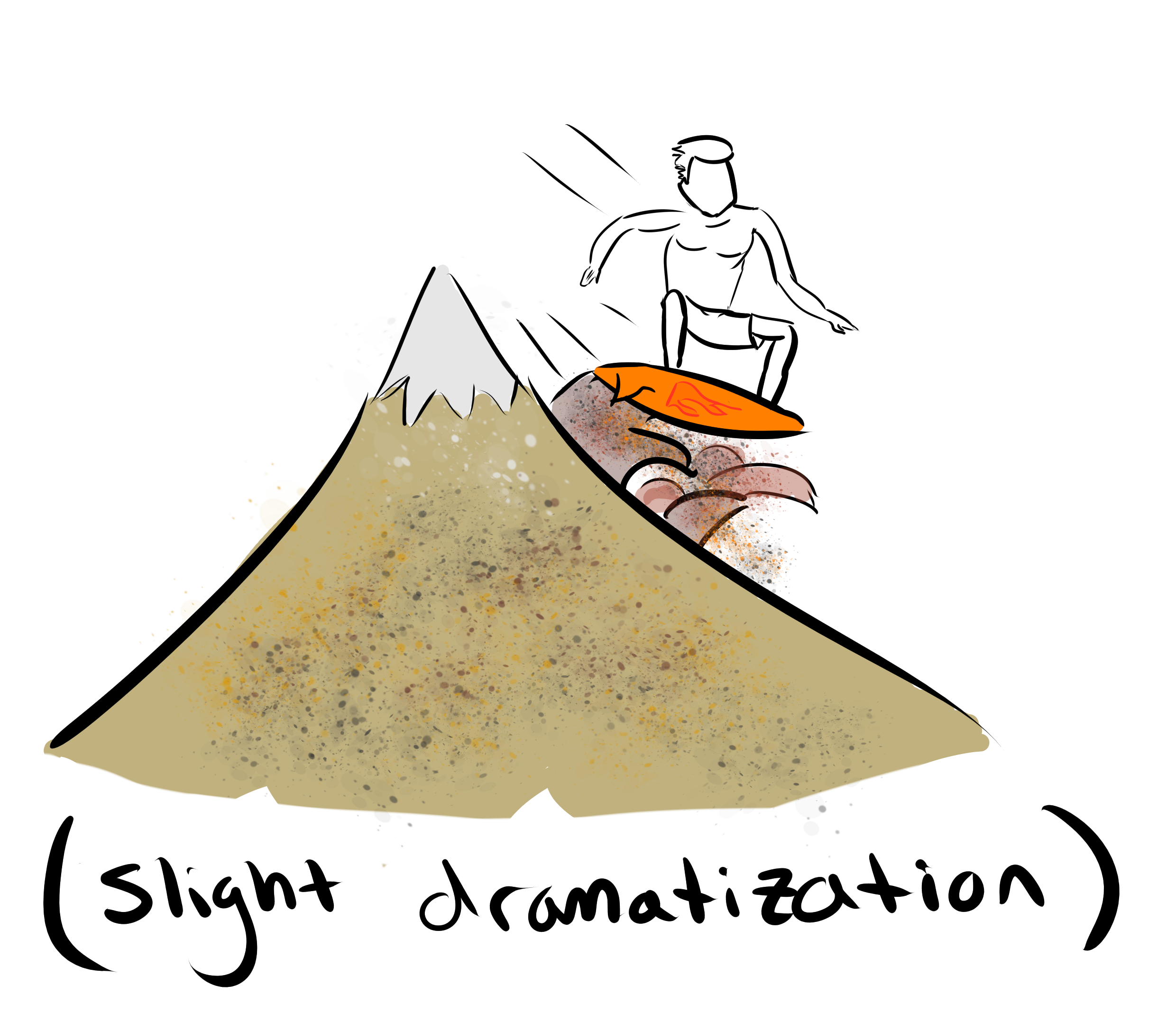
These failures can be as fast as an avalanche charging down a mountain, or as slow as the creep of a tectonic plate building towards an earthquake. They can be as small scale as the footsteps we leave in our wake on the beach, or as large as a landslide spanning an entire mountain.

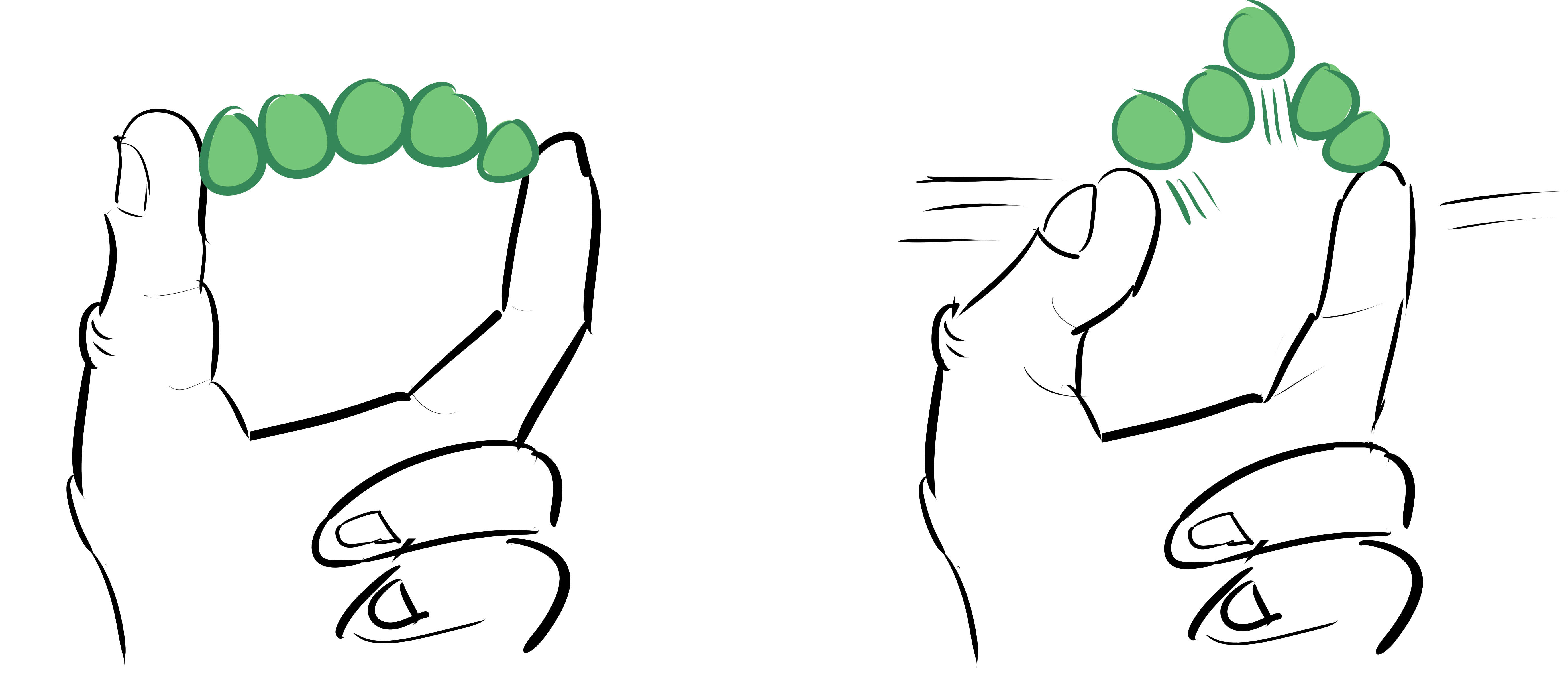
My work investigated if the role of friction, a fundamental contributor to the stability of granular materials, can be better understood throughout the whole failure process. This involved small scale laboratory experiments, making use of photoelastic techniques to quantify interparticle forces as we drive a system towards failure.

Stochastic Trapping in Biology

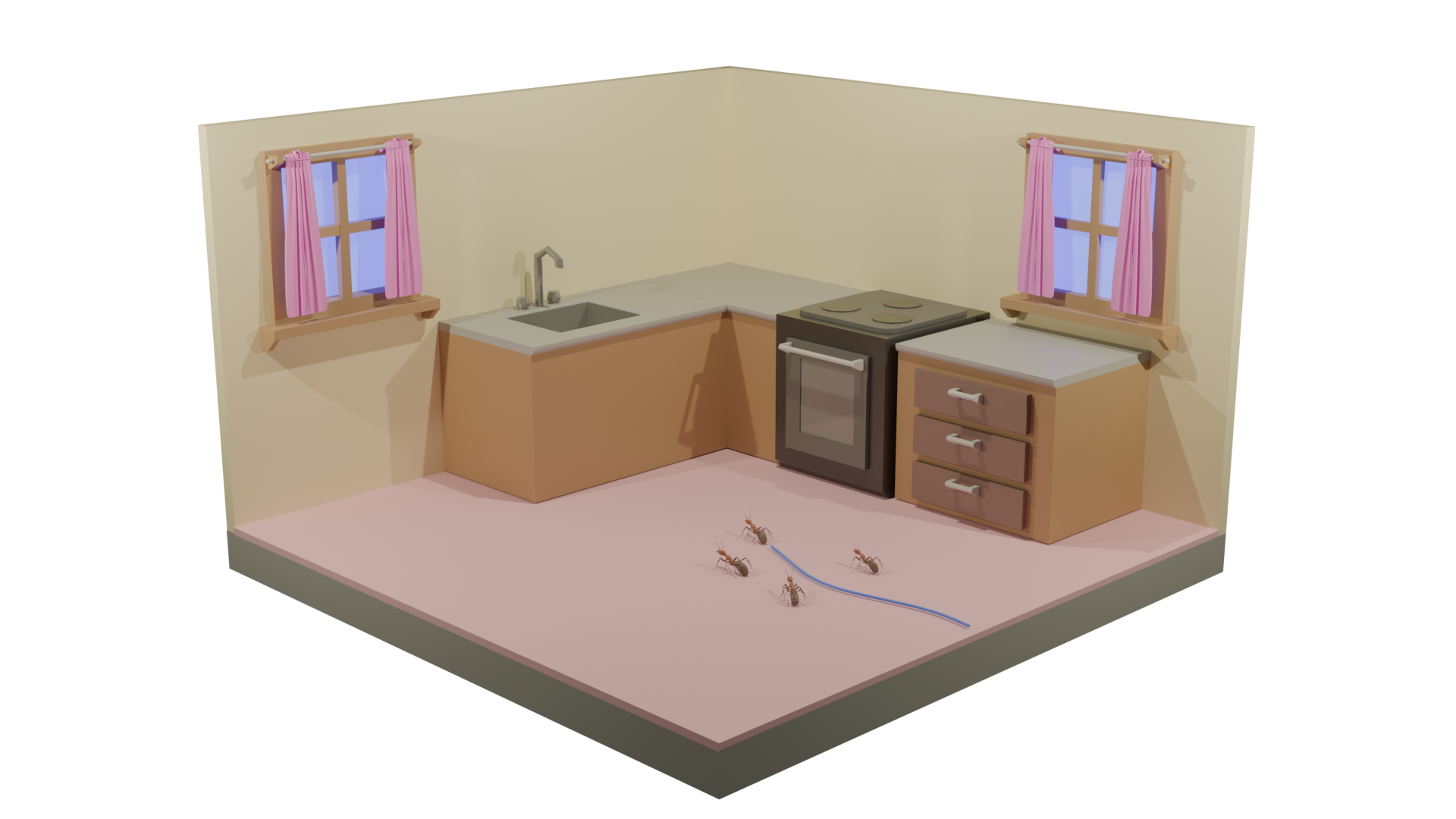
I want you to imagine that you've just arrived home, excited to have a snack after a long day of whatever it is that you do, only to find that your kitchen has been invaded by ants!

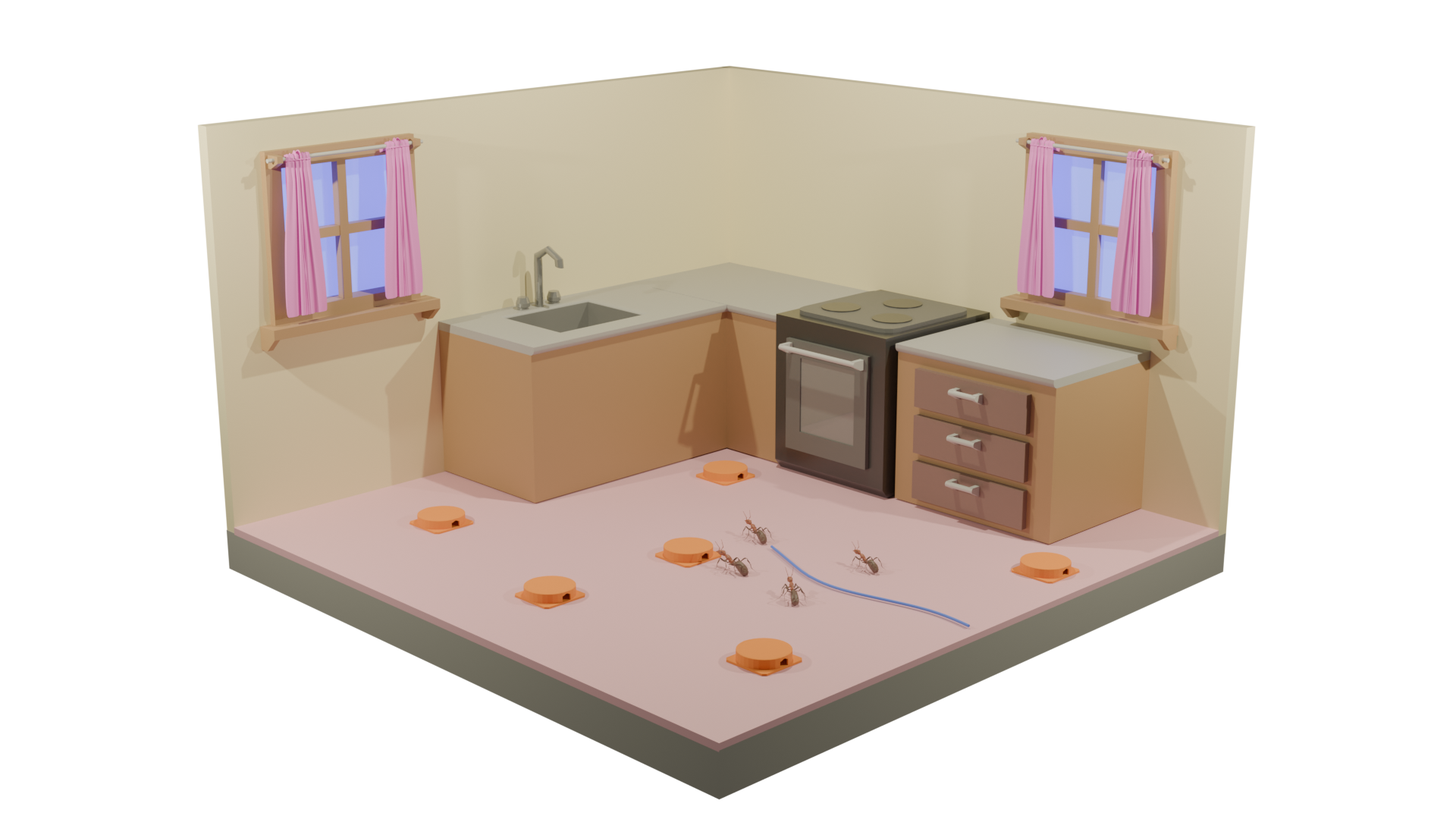
Probably you don't want to share your groceries (in this economy? come on...) with the new guests, so you go to the store and buy some ant glue traps. In case you've never seen these before, they are sticky pads you can place around your kitchen and if an ant walks over it, its legs get stuck.

The question I'd like you to consider is this: in order to catch these ants with the highest probability (or maybe as fast as possible) how should you place the traps around your kitchen? Put all your eggs in one basket by grouping them together? Space them out equally to try and cover the widest area possible?

Despite seeming like a rather silly problem to dedicate years of study to, this paradigm is ubiquitous, and shows up in fields ranging from finance, to astrophysics, to missile defense. Phrased more generally, we are interested in how we should distribute some limited resources (traps, in this case) throughout a space to minimize the time it takes for some agent (ants, in this case) to encounter that resource. In astrophysics, we could consider how we should orient our few, precious radio telescopes (resources) out into the cosmos to see something, say an undocumented comet (agent). In finance, we could consider how we should distribute our portfolio (resources) to maximize profits as the stock market (agent) "moves."

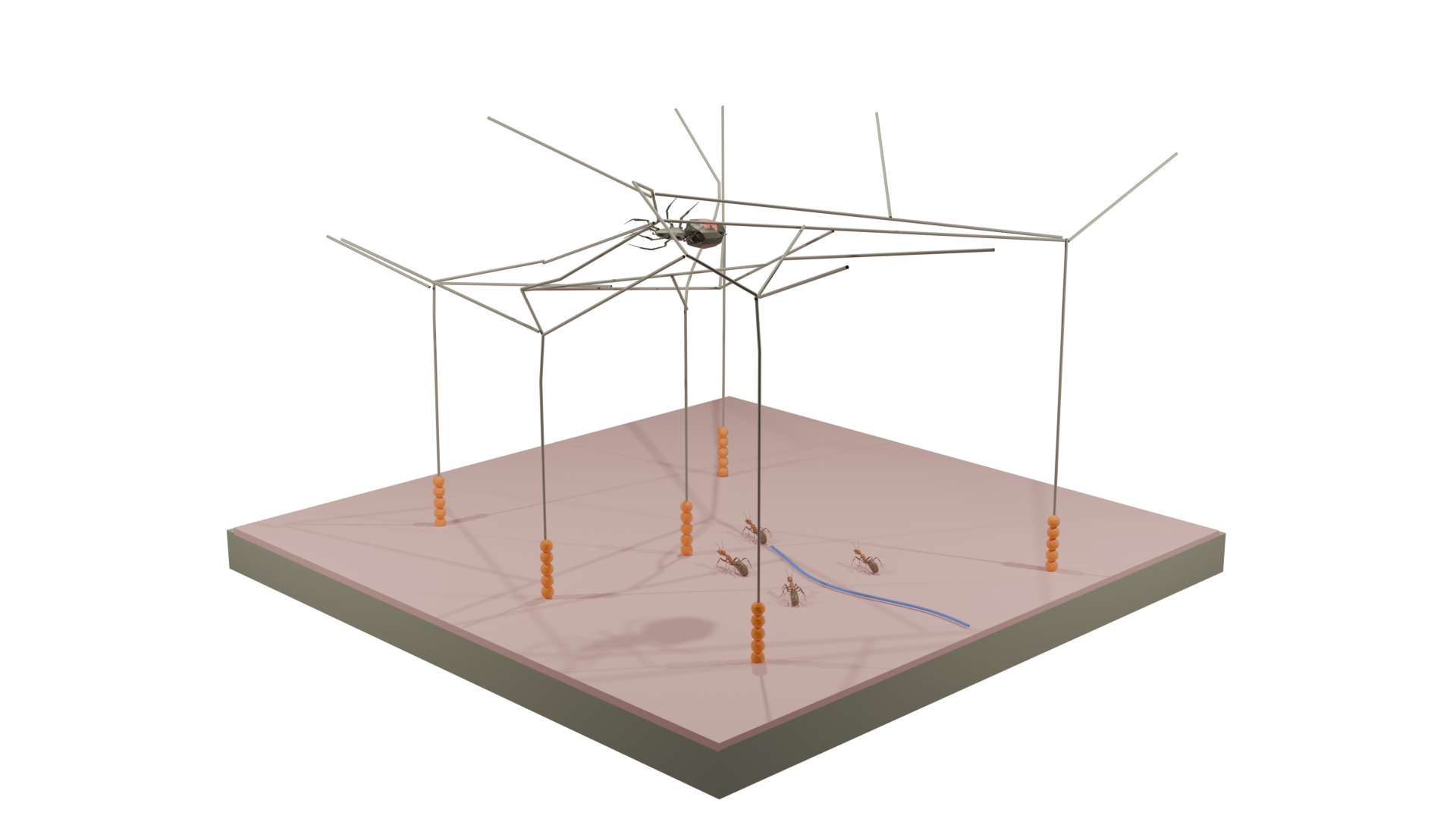
The particular context that got me interested in this problem is maybe not as grand as the above examples, but still incredibly cool: spiders! Widow spiders, like the famous black widow or Australian red back, are one of several species that weave tangly, three-dimensional cobwebs with traps for prey just like our kitchen example.

My current work at OIST focuses on understanding if these spiders use any particularly smart strategies for catching their prey, and whether there are optimal solutions for trapping a run-and-tumble-like stochastic process in two-dimensions.